By: Pir Azhar U Din
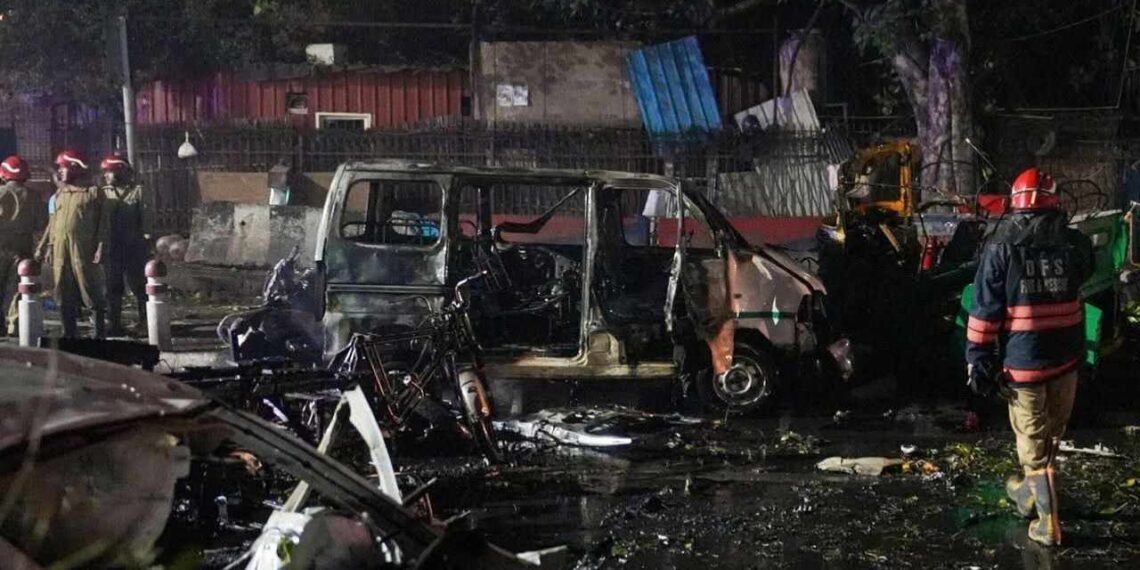
Baba Nagri in Ganderbal rarely wakes to national headlines, but on November 16 the village opened its eyes to a grief that travelled silently from Old Delhi. Bilal Ahmad Sangoo, a 28-year-old cart-puller who had spent six years working in the markets around the Red Fort, had not called home since the blast that ripped through the area. His phone remained switched off. By evening, the family received a call that changed everything: they would need to travel to Delhi for a DNA test to confirm whether Bilal was among the dead.
Inside the Sangoo home, grief sits in the corners like a permanent guest. Bilal’s mother, a long-time heart patient, lies on her bed waiting for her son’s daily phone call. The family has decided not to tell her the fear that now shadows the village — that Bilal may no longer be alive. “His phone has been off since the blast,” whispers a neighbour. “Every few minutes she asks if he called.”
Bilal had left home because the Valley offered no work. In Delhi, he pushed a heavy goods cart through the congested lanes near the Red Fort, transporting loads far heavier than the burdens he carried quietly within. His brother Riyaz recalls how he saved every rupee. “He would say, ‘Let me struggle; at least the house should run smoothly.’” Bilal had promised to return next month to help renovate the kitchen before winter. Now that promise is a memory the family holds with trembling hands.
As news spread across Wangath, neighbours poured into the house, many holding radios or phones with news updates playing softly. Outside the gate, an elderly neighbour, Abdul Qayoom, shook his head. “Bilal never hurt a fly. He grew up before our eyes. If there was a wedding, he was the first to help. If someone needed wood carried, he would do it without a word. That boy worked with his hands, not with his tongue.”
Raja Begum, a 55-year-old neighbour, wiped her eyes as she recalled her last meeting with him. “Whenever he visited, he brought something small for us. Once he gave me a shawl. I told him I didn’t need it, but he insisted, ‘You are like my mother.’ Who knew that would be the last time?”
A few lanes away, his childhood friend Nazir leaned against a walnut tree, staring at the crowd outside the Sangoo home. “He was quiet and dependable. When he left for Delhi, he said he would save enough to start something of his own here. He wanted a life in Kashmir, not there. But poverty doesn’t spare anyone.”
Confusion in national media also added to the family’s distress. Some outlets incorrectly named the victim, but local Kashmiri media identified him clearly as Bilal Ahmad Sangoo of Wangath. “Why can’t they even write his real name?” asked a neighbour angrily. “He mattered. He is not just ‘a man from Kashmir’.”
Delhi Police said several bodies sustained severe burn injuries, and families were called for DNA-based identification. A senior officer, speaking off the record, said no identity would be confirmed until DNA profiles matched. The Sangoo family left before dawn on Sunday, carrying Aadhaar cards, photographs, and a fragile hope they could barely hold.
Back in the village, the lanes have fallen silent. Men gather near the mosque, lowering their voices when Bilal’s father passes. Women sit around his mother, who has not slept since the blast, still asking whether her son will call. “He always said, ‘I will make you proud, mother,’” she whispers, clutching his photograph. “He worked so hard. That is all he ever did.”
Bilal’s story is one among thousands — men who leave Kashmir because there is no work, who carry the weight of distant cities, who return home only briefly before heading back to survive. Their labour builds markets far from the mountains they belong to; their lives remain invisible until tragedy forces them into the news.
For now, Bilal Ahmad Sangoo remains suspended between a village praying for certainty and a city that rarely notices the men who carry its burdens. As his mother said before the family left for Delhi, “Even if it is him, bring my son home