Kargil, Ladakh // In the cold, isolated valleys of Taisuru — a remote and marginalized village in Suru Valley under Kargil district — a small group of determined youth have proven that community willpower can succeed where formal systems failed.
Cut off for nearly eight months every year by snow and landslides, and located about 230 kilometers from Kargil town, Taisuru remains one of the least connected regions of Ladakh. Most residents depend on farming and daily wage labor, and until recently, education was a forgotten dream for many children here.
In the late 1990s, disturbed by the sight of children wandering idle or helping their parents in fields, a few educated youth led by Syed Hassan came together to find a solution. They formed the Evergreen Education Welfare Society (EEWS) — a community-driven group registered under the J&K Societies Act — with a single vision: to bring quality education within reach of every child in Taisuru.
At first, the society had no funds or infrastructure. Villagers collected small donations and government employees contributed part of their salaries. An elderly villager, Haji Haider, offered one room of his home to start makeshift classes. Local youth volunteered as teachers, often working without pay, while women in the village helped prepare meals for students.
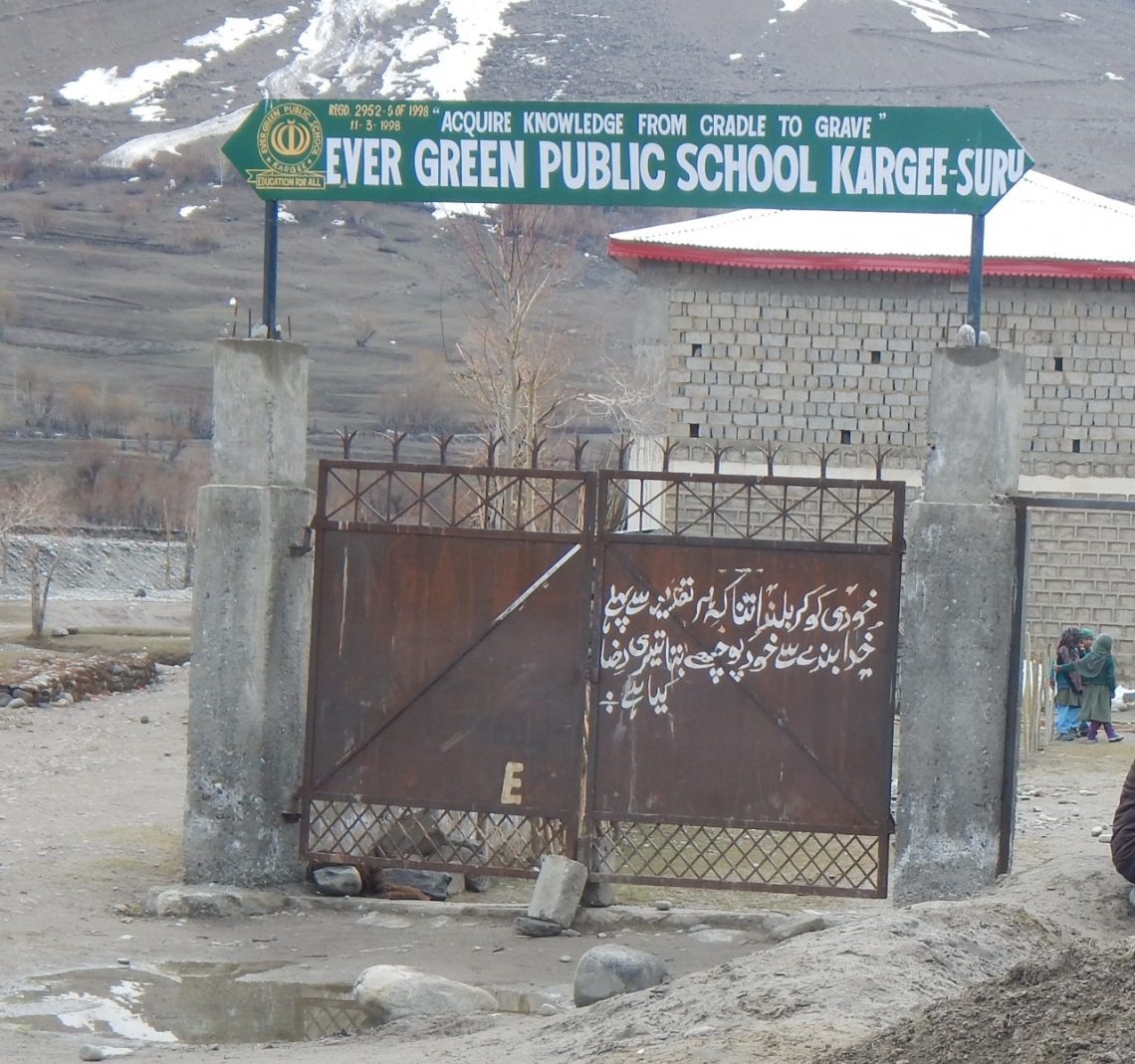
By the year 2000, their consistent effort led to the establishment of Evergreen Public School, the first community-run school in the area. Starting with only 15 students, the school today educates over 220 children, half of whom belong to families living below the poverty line.
To keep education accessible, the society charges a nominal annual fee of ₹300–₹500 from those who can afford it, while others study free of cost. The school runs up to 8th standard, and plans are underway to introduce higher secondary classes in the coming years.
The Evergreen Education Welfare Society also focuses on empowering local youth by engaging them as teachers and staff, providing small stipends and skill-development opportunities. “We believe education is not only about books but also about dignity and responsibility,” said Syed Hassan, the society’s founder and president.
Recently, the society received major support from the Global Himalayan Expedition (GHE), which established a digital classroom with computers, a solar-powered server, and furniture, bringing modern learning resources to this remote Himalayan region for the first time.
However, challenges persist. Many students walk several kilometers through rough terrain to attend classes, and there is still no hostel or transportation facility. The society has appealed to the Ladakh Autonomous Hill Development Council (LAHDC) and the Education Department for assistance in building a student hostel and securing long-term teacher salaries.
Despite limited means, the story of Taisuru’s Evergreen Education Welfare Society stands as a symbol of how collective local action can bridge educational gaps in the most neglected corners of the Himalayas — proving that real change begins when communities take the lead.