
Sadaf Shabir | Srinagar | Citizen Reporter India
In the heart of Srinagar’s historic Rainawari area, the soft clang of hammer on silver still echoes inside a modest shop—one of the last living spaces of Kashmir’s traditional silver craftsmanship. Mohammad Yousuf, a veteran artisan, continues to run his ancestral silver workshop, unlocking its shutters every morning with the same dedication he has carried for over five decades.
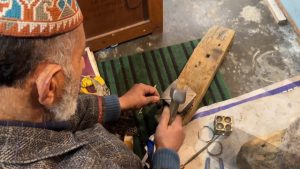
Inside this small shop, Kashmir’s history breathes through silver. From British-era silver coins to delicately crafted silver sandals once worn by Kashmiri queens, the walls silently narrate stories of a bygone era.
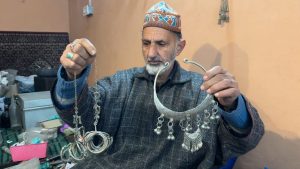
Women from far-flung areas of Kashmir once travelled here to handcraft their silver jewellery, keeping alive an art form passed down through generations.
Yousuf is among the last few custodians of this heritage. When asked about the future of silver craftsmanship, his response mirrors the quiet despair of hundreds of Kashmiri handicraft artists struggling to survive in changing times.
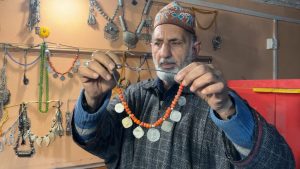
“I have been doing this work for nearly 50 years,” he says. “Silver has become expensive, and the market is flooded with machine-made and imported metal items. These products are cheaper and have badly affected our traditional craft.”
Once a thriving business, silver craftsmanship in Rainawari is now on the brink of extinction. Where there were dozens of workshops earlier, only two or three functional silver units remain today. No young hands are learning the art anymore.
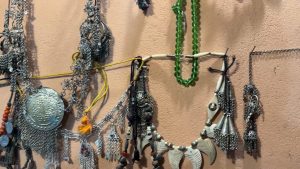
“There was a time when every home had a craft unit,” Yousuf recalls. “When I was a child, my father was my teacher. After school, I would spend two to three hours crafting silver items with him—sometimes working till midnight. That was a golden time. People across Kashmir knew our work.”
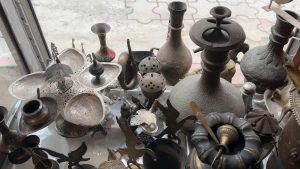
From utensils to intricate jewellery, Yousuf crafted everything by hand. Many of those masterpieces still hang on the walls of his shop as silent witnesses to a flourishing past.
Despite trying to adapt by creating new designs, artisans face another challenge—rapid imitation. “As soon as we make a new design, it is copied quickly. We don’t benefit from our creativity,” he explains.
Government-supported exhibitions once gave artisans like Yousuf a platform to showcase their art, but such opportunities have become rare. “We request the government to organise more exhibitions so we can present our work to the world,” he adds.
With rising raw material costs, shrinking markets, and no financial security, the younger generation sees no future in this craft. What was once a respected and sustainable livelihood has now become a struggle for survival.
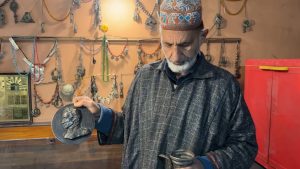
Mohammad Yousuf’s shop is not just a workplace—it is a living museum of Kashmir’s silver heritage. If timely support, policy intervention, and market access are not ensured, this centuries-old art risks disappearing forever.