Kupwara, J&K | 10 November 2025
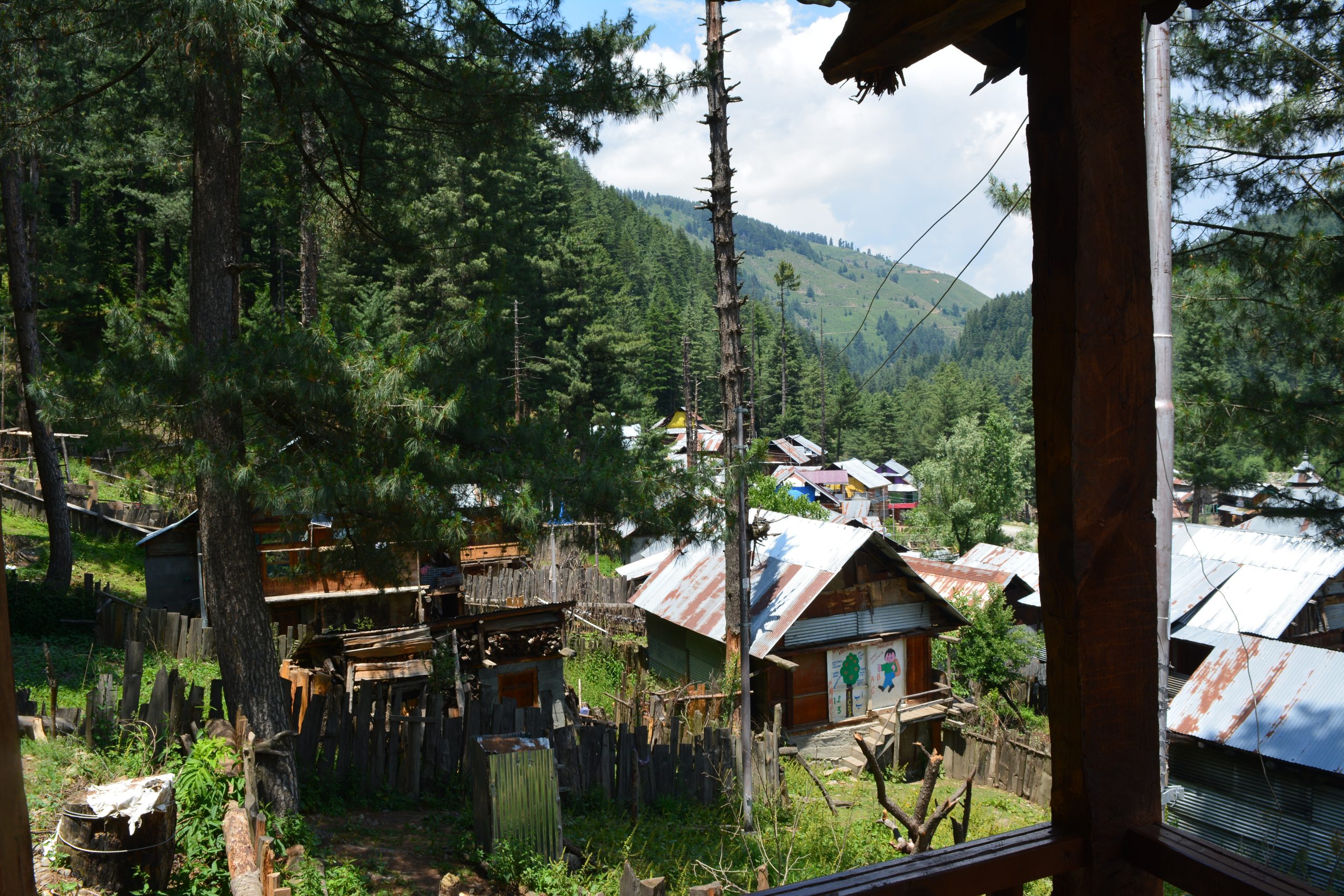
In a quiet valley of North Kashmir’s Kupwara district, tin-roofed huts shimmer faintly under the pale light of the Drangyari stream. These fragile structures are home to the displaced tribal families of Rangwar, who have been living in limbo for the past two decades — torn between the memory of an earthquake and the weight of the law.
Their old village, perched high in the hills, was destroyed in the 2005 earthquake that shattered the mountains and lives alike. With nowhere to go, dozens of families walked down nearly three kilometres to the Chowkibal–Tangdhar road and built temporary shelters on a vacant patch of land near the forest. Officials at that time, villagers recall, told them to stay there “for now” until proper rehabilitation was arranged. But twenty years later, those promises remain unheard.
Then, in January 2020, a new blow came — eviction notices from the Forest Department. The officials claimed the families had illegally occupied two hectares of forest land. Fear and confusion spread through the small settlement as people struggled to understand how the land that gave them shelter could now turn against them.
Zaheer Ahmad, who was just eight years old when his family moved to this site, stood outside his small tin house as he spoke to CRI. His voice carried a mix of exhaustion and defiance.
“The government should decide what we have to do — we will not leave this place now. These temporary shelters are our heaven. We will die but won’t allow anybody to touch them,” he said.
“We are the people who stop smugglers from entering the forest. We have not encroached on forest land — you can see there are no forest trees here. This patch is barren. And since we are tribals, we are rightful owners under the Forest Rights Act.”
His words echo the collective sentiment of nearly 40 families still living here without electricity, roads, or proper sanitation. The village disappears under snow for months, and families depend on firewood and solar lanterns to survive.
Shazia Begum, a mother of three, said her children have never known a proper home.
“When it rains, the water seeps in from every corner. In winter, we burn wet wood just to stay alive. Our children study under solar lights, and sometimes the cold is so sharp we can’t even hold a pen,” she said softly.
The only government facility in the settlement is the Government Middle School Rangwar, which once ran inside a makeshift tin shed built by villagers. Recently, the TYCIA Foundation, a Delhi-based NGO, brought hope to the community by installing a solar power system, providing clean water, whiteboards, and furniture, and constructing three new classrooms from tin and plywood.
“It’s not ideal, but it’s something,” said a local teacher. “The children finally have space and light to study.”
However, government development remains at a standstill. The Forest Department’s restrictions have prevented other departments from laying roads, building drainage systems, or extending power lines. Even the MGNREGA employment scheme — which could help villagers earn — cannot be implemented here.
An employee from the Rural Development Department (RDD) told CRI:
“Since the current Rangwar settlement falls within a notified forest area, we are not permitted to execute any work without forest clearance. We have done MGNREGA work at the old Rangwar site where a few families still live, but not here. Every proposal for this area is either returned or stalled because of legal status issues.”
When approached for comment, a forest official, speaking anonymously to CRI, said the department was following standard forest protection procedures.
“These families have constructed shelters on forest land. Notices were served, and the case is with higher authorities for direction,” the official stated briefly.
For the residents, such explanations sound hollow after two decades of endurance. They say their only fault was obeying government advice when they moved down from the mountains after the quake. “We were told to stay here, and now they call us illegal,” said an elderly villager.
Today, Rangwar stands as a paradox – a community caught between survival and law, compassion and compliance. The villagers’ huts may be fragile, but their spirit remains unbroken. They continue to fight not just for land, but for recognition — for the right to live with dignity in the place that has become their reluctant home.