Kupwara |8 November 2025
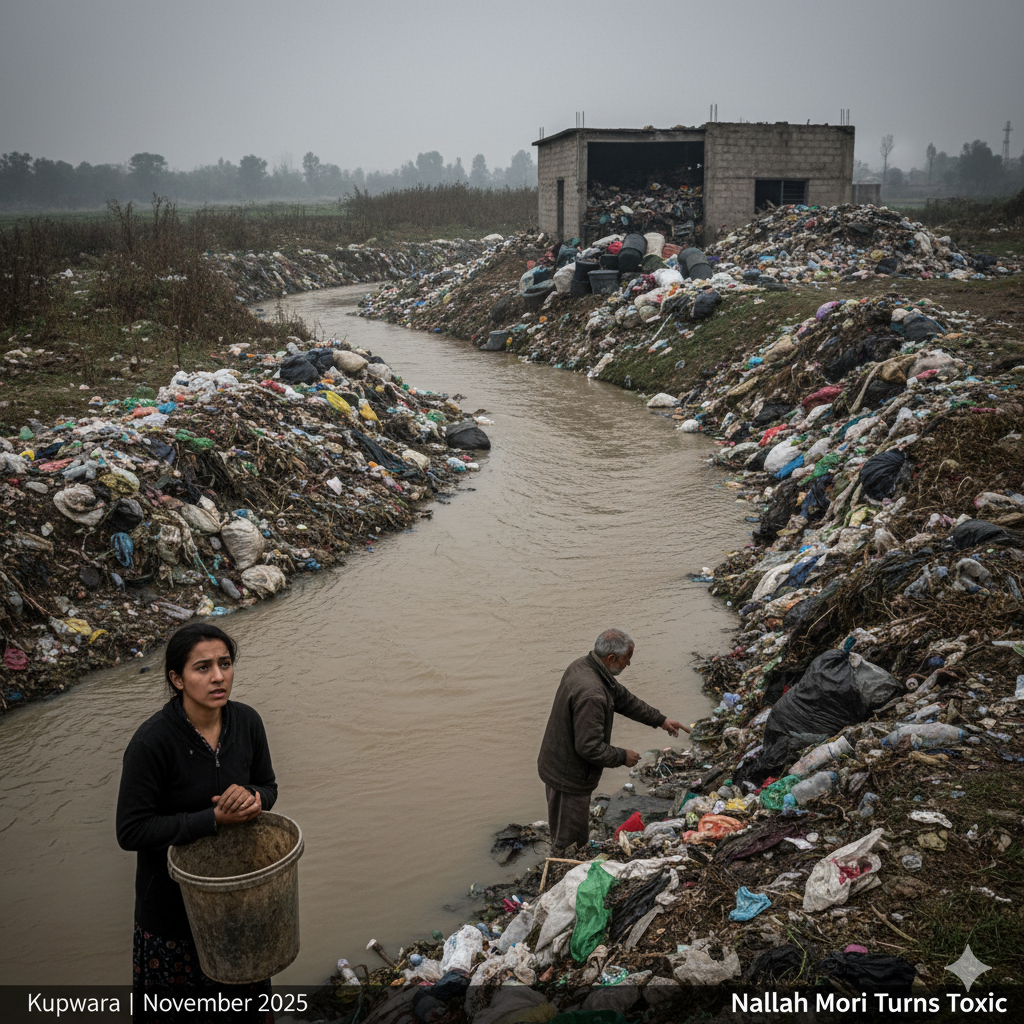
A freshwater stream once known for its purity and trout fish in north Kashmir’s Kalaroose area of Kupwara district has turned toxic after years of administrative neglect, leaving the rural and marginalized communities struggling for safe water.
Nallah Mori, fed by melting snow and natural springs, irrigates hundreds of kanals of farmland and provides drinking water to nearly 40,000 residents, including many tribal families scattered across the region. Local residents say the water has become unsafe after the Rural Development Department (RDD) constructed seven segregation sheds along the nallah in 2023 for garbage collection — but failed to maintain them.
With no sanitation staff or waste transport in place, garbage piles up around the sheds and is washed into the stream during rainfall. The once-clear water now runs brown, carrying plastic waste and emitting a foul smell. Fish have vanished, and the water used by the rural community for irrigation, drinking, and even for livestock has turned hazardous.
“This is the same water we drink, cook with, and give to our animals,” says Fahmeeda, a 17-year-old from Kalaroose. “Earlier it was sweet and cold — now it smells bad. My younger brother fell sick last month after drinking it.”
The pollution has devastated aquatic life. Trout, once abundant, have disappeared. Irfan Ahmad, 29, from Madmado hamlet, who used to fish in the stream, says,
“Two years ago, I could catch a few trout in an hour. Now I spend the whole day and see nothing. The water is poisoned — even the insects are gone.”
Elders recall a different time. Ghulam Nabi, 72, from Lada hamlet, says,
“You could count the pebbles at the bottom. We used to drink straight from it during harvest. It feels like we have killed our own river.”
Despite these concerns, locals allege that no inspections or water quality tests have been carried out by the Jal Shakti Department or the Pollution Control Board, even though five water supply schemes draw directly from the stream.
The rural and tribal communities, who are the most vulnerable, are demanding urgent removal of the waste sheds and restoration of Nallah Mori.
“Our elders said, take care of the water and it will take care of you,” adds Ghulam Nabi. “We forgot that — and now the water has turned against us.”